Social Media Bans for Kids Gain Steam

Governments in two major English-speaking countries moved this week to restrict children’s access to social media, adding momentum to a global policy push that Australia set in motion when it imposed an outright ban for under-16s last December. The moves come as parents in both nations have called loudly for action, and as research continues to link heavy platform use among adolescents to anxiety, depression, and disrupted sleep.

Canada tabled Bill C-34, the Safe Social Media Act, which would bar children under 16 from holding accounts on social media platforms, live-streaming services, and adult content sites. The legislation also addresses AI chatbots, requiring them to implement crisis intervention protocols when users express intent to harm themselves or others. Platforms that can demonstrate sufficient child-safety safeguards may apply for an exemption, but those that fail to comply face fines of up to three percent of global revenue or C$10 million, whichever is greater. A new Digital Safety Commission would oversee enforcement, though officials say the bill could take a year to pass and eighteen months more to stand up the commission.

The UK is farther along the road to implementation. A national consultation on children’s digital wellbeing closed in late May after drawing more than 116,000 responses. Nine in ten participating parents said they favored a ban, according to Technology Secretary Liz Kendall. Under the Children’s Wellbeing and Schools Act, passed in April, the government is legally obligated to impose some form of age or feature-based restriction for under-16s, with ministers targeting regulations by year’s end. Options include a minimum age for social media, restrictions on addictive design features like infinite scroll, autoplay, and algorithmic recommendations, and overnight curfews.

Platform design sits at the center of both proposals. Algorithmic recommendation systems, engagement-based feeds, autoplay, and endless scrolling are identified as features that amplify harmful content and increase exposure, particularly for young users. When Australia’s law took effect last December, social media companies collectively deactivated the accounts of nearly five million teenagers within a month.

France, Denmark, and Poland are considering tightening rules, while Greece announced it would ban access to young people under 15 from January 2027. For families in most developed countries, formal rules on children’s social media access are increasingly a question of when rather than whether.


Olive Young Brings K-Beauty to America 

Korean beauty giant CJ Olive Young opened its first American store in Pasadena, California on May 29, placing an 8,647-square-foot flagship on West Colorado Boulevard in the city’s main commercial district. The company operates more than 1,380 stores in Korea and generated roughly $4.2 billion in annual Korean sales in 2025, making the U.S. entry a deliberate expansion into what has become its most commercially significant market outside of Korea. 

In the first half of 2025, more than half of Olive Young’s global sales came from U.S. customers, who also accounted for over 40 percent of total sales growth during the same period. The company has operated cross-border e-commerce since 2018, so the decision to open a physical store reflects a strategic shift rather than a first attempt to reach American consumers. The United States overtook China in 2025 as the top destination for K-beauty products, accounting for 54 percent of overseas online sales, up sharply from 18 percent in 2022. 

The store’s format is built around hands-on trial rather than inventory breadth alone. Olive Young offers a “try before you buy” experience, allowing customers to test serums, toner pads, sunscreens, and beauty devices in person — products that, until now, many American buyers could only access online. The store also features AI-powered skin analysis and personalized consultations modeled on Korean locations. 

South Korea’s cosmetics exports reached a record $11.4 billion in 2025, making the country the world’s second-largest cosmetics exporter behind France and ahead of the United States. Olive Young’s physical presence signals that the category’s growth is large enough to support the higher operating costs of American retail. The company plans to open at least five more California locations by the first half of 2027, with a second store at Westfield Century City already imminent, and New York expansion planned after that. Whether the Pasadena format translates economically beyond Los Angeles’s demographically concentrated K-beauty demand will determine how far the rollout can realistically go.

Singapore Airlines Upgrades to Starlink for In-Flight Connectivity

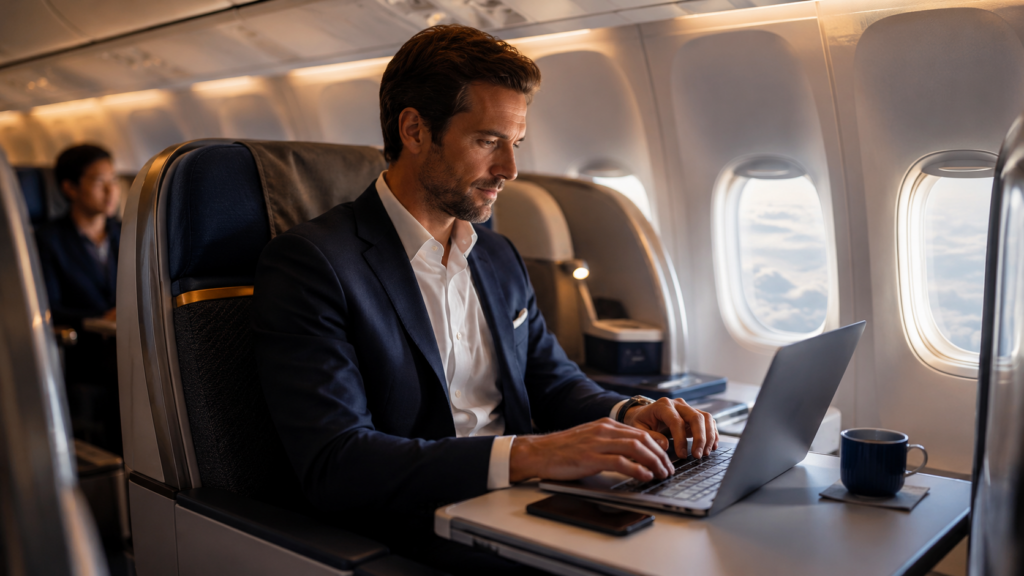
Singapore Airlines will start installing Starlink satellite internet on its A350 and A380 aircraft in early 2027, wrapping up the rollout by 2029. The move brings multi-gigabit speeds to long-haul and ultra-long-range routes, letting passengers work and stream without the dropouts that plagued older systems. Singapore Airlines plans to offer it free across all cabins, including economy passengers in its loyalty program, which means the upgrade benefits the entire fleet rather than just premium travelers.

Starlink’s low-orbit satellite network delivers noticeably faster speeds than traditional aircraft Wi-Fi. Passengers can stream video smoothly, download large files, and stay productive throughout flights. For business travelers who need to work during long flights, the improvement is substantial. Leisure passengers get better entertainment options too, whether catching up on shows or staying connected with friends and family overseas.

The rollout positions Singapore Airlines alongside carriers making similar moves. British Airways has already begun Starlink installations, and other operators are exploring satellite connectivity options that work for their specific networks. Delta chose Amazon’s Project Kuiper system, while KLM added free terrestrial Wi-Fi on European routes. Each airline is tailoring connectivity to fit its route structure and passenger base, reflecting how important reliable internet has become to modern travel.

Adding satellite antennas does increase aircraft weight, a consideration on ultra-long-haul flights where efficiency matters. Singapore Airlines weighed this tradeoff and determined the benefit justified the operational change, particularly for passengers on routes where connectivity expectations are highest. The gradual rollout through 2029 also allows the airline to integrate the technology smoothly without disrupting operations.

From a passenger perspective, the upgrade addresses one of the lingering frustrations of long-haul travel. Starlink connectivity means business travelers can finish work, stream movies without buffering, and stay in touch throughout flights. Singapore Airlines’ decision to make it free across all cabins removes the friction of paying for or managing different service tiers, creating a simpler and more consistent experience for everyone on board.

Home Maintenance Rises With Property Age

The typical home in the United States is now about 44 years old, reflecting a housing stock that has gradually aged as construction has not kept pace with demand over time. Many of these homes were built under different standards and for different patterns of use, which can create practical challenges as systems and materials wear down.

Maintenance needs tend to increase as homes age. Components such as roofing, plumbing, and electrical systems often reach the end of their expected lifespan, requiring repair or replacement. These updates can vary widely in scope, from routine fixes to more extensive work that affects multiple parts of the home. For homeowners, this introduces an added layer of planning, particularly when costs are uncertain or arise unexpectedly.

The age profile of housing also shapes the experience of buying and selling. Prospective buyers are placing more emphasis on inspections and long term upkeep when evaluating properties. In many cases, renovation plans are considered early in the process, especially when older homes require updates to meet current preferences or building standards. Sellers, in turn, may invest in improvements before listing to address potential concerns.

A slower pace of new construction in previous decades has contributed to this dynamic. With fewer newer homes available in some markets, older properties continue to make up a large share of transactions. This keeps attention on the condition and adaptability of existing homes rather than on expansion of supply alone.

The result is a housing landscape where upkeep plays a more visible role in financial decisions. Homeownership involves ongoing evaluation of repairs, upgrades, and timing. As homes continue to age, these considerations remain a consistent part of how people manage and use their living spaces.

Influence Is Shifting Toward Thoughtful Voices

Brands are starting to rethink the kind of voices they align with, moving away from the long-held assumption that reach alone drives results and toward creators whose influence comes from how they think, write, and shape taste over time. The shift is less about scale and more about attention, with companies placing value on audiences that are engaged, curious, and willing to spend time with an idea rather than scroll past it.

Much of this influence now sits on newsletters and podcasts, where the pace is slower and the tone more deliberate. Instead of polished visuals and quick endorsements, these creators offer perspective on culture, design, and technology that unfolds over paragraphs, not captions. That depth builds a different kind of trust, one rooted in consistency and clarity, where recommendations feel like a natural extension of the work rather than an interruption.

Creators like Mindy Seu focus on preserving and organizing digital culture in ways that give it lasting context, building tools and archives that appeal to designers and researchers who care about how the internet evolves over time. Cleo Abram reaches a wide audience through videos that explore emerging technology with a sense of curiosity and clarity, drawing viewers in with explanations that hold attention rather than chase it. Their work stands on its own, which is why people return to it.

For brands, this approach offers something more durable than visibility alone. A mention within a thoughtful piece lands differently because it is tied to context and intention, reaching people who are already invested in the conversation. For readers, the appeal is just as clear, with these voices helping to sort what is worth time and what is not, leading to choices that feel more considered and less driven by noise.

Breaking Barriers: Giving Every Kid a Shot

In a world where screen time often wins out over outdoor play, the importance of kids in sports can’t be overstated. Participation in youth athletics helps build confidence, teamwork, resilience, discipline, and a sense of belonging. Through sports such as hockey, kids learn how to work with others, how to face challenges, and how to handle both success and failure. These experiences help shape their confidence and build their character.

For many families, the cost of registration fees, equipment, and transportation can create significant barriers to participation. Without access, kids miss out on the chance to develop these important skills. They also miss out on the crucial sense of community and belonging that comes from being part of a team.

Programs like Every Kid Deserves a Shot aim to change that. This initiative from the Edmonton Oilers Community Foundation works to ensure that more kids across Central and Northern Alberta have access to the benefits of hockey, regardless of their family’s financial situation. By offering financial support, the program opens doors for kids who might otherwise miss out. The initiative emphasizes how vital sports can be for children’s emotional and social development. Beyond physical skills, it teaches them how to collaborate, communicate, lead, and share responsibilities.

The program supports diverse opportunities, including entry-level hockey, girls’ hockey, inclusion programs for children with disabilities, and community partnerships that give kids the tools to grow both on and off the ice. Since its launch, the Edmonton Oilers Community Foundation has already inspired over 75,000 kids through this program, invested over $14 million in the community, and committed millions more in funding by 2030.

Programs like this are crucial because they ensure equal access, offering every child the chance to grow through sports. Sports participation teaches kids how to navigate triumph and disappointment with grace, make lifelong friends, and be part of something bigger than themselves. Through the Edmonton Oilers Community Foundation’s Every Kid Deserves a Shot program, doors open to new opportunities and barriers are removed so that the benefits of sports are available to all kids. By giving kids a sense of belonging and the chance to form lasting friendships, we help ensure that all kids can learn and grow in a safe and supportive environment. In turn, we build stronger communities where every child has the opportunity to thrive.